HYDROVANE – MARKETING – FEHLER – KONSEQUENZEN
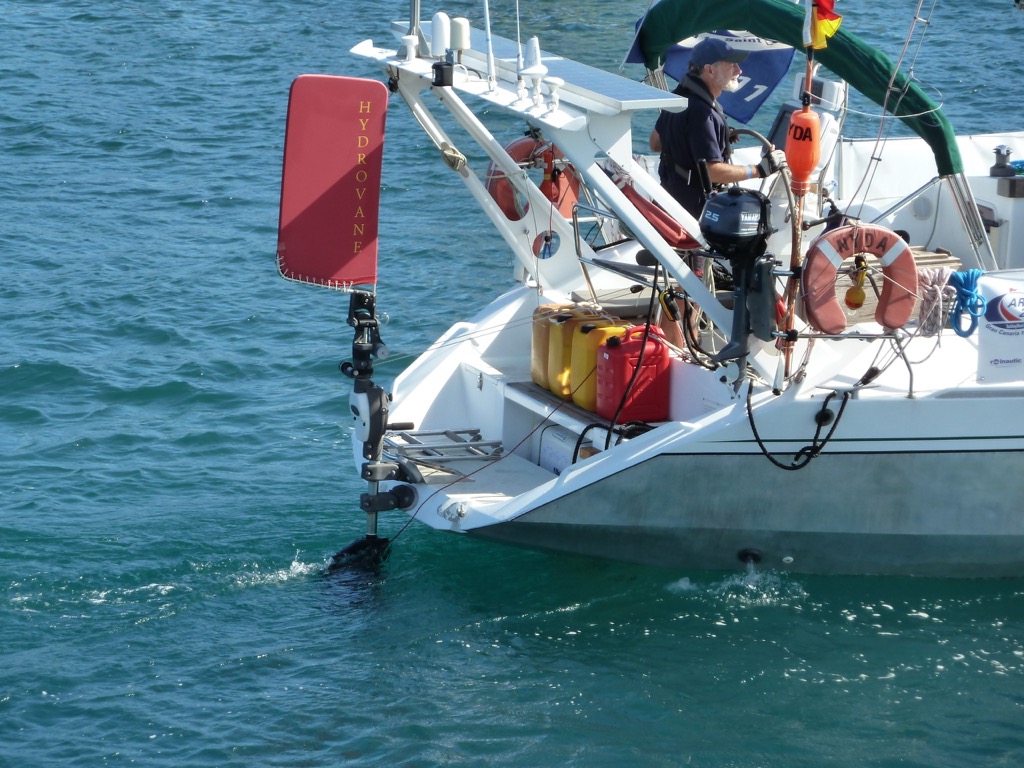
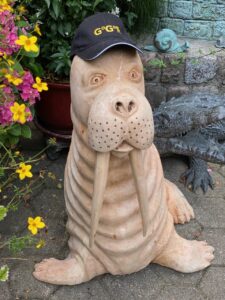 It has been almost ten years since I asked Don (on 24 November 2016, to be precise) whether it might be possible, desirable and worthwhile for us to work together in respect of transom ornamentation for his replica event the GOLDEN GLOBE RACE.
Don’s response:
Hi Peter
I appreciate your offer of partnering up with the Golden Globe race which is going to be quite an event that is for sure. The situation is that we very early on established a joint relationship with Hydrovane which is obviously exclusive and we are quite happy about that so unfortunately, we are unable to have another self-steering system on board.
So I hope you enjoy watching the Race and again thanks for the interest.
All the very best for now and the future
Don McIntyre
2018 Golden Globe Race Founder
Nothing ventured, nothing gained, of course, but it was clear the train had already left the station: Don had made the fateful decision to take on Hydrovane as his sponsor. He had made his bed and he was going to have to lie in it – an experience that would prove somewhat less comfortable than he might have hoped.
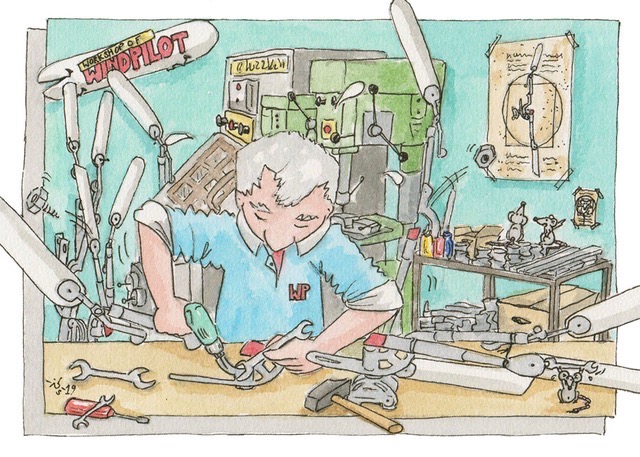
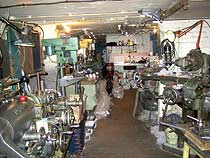
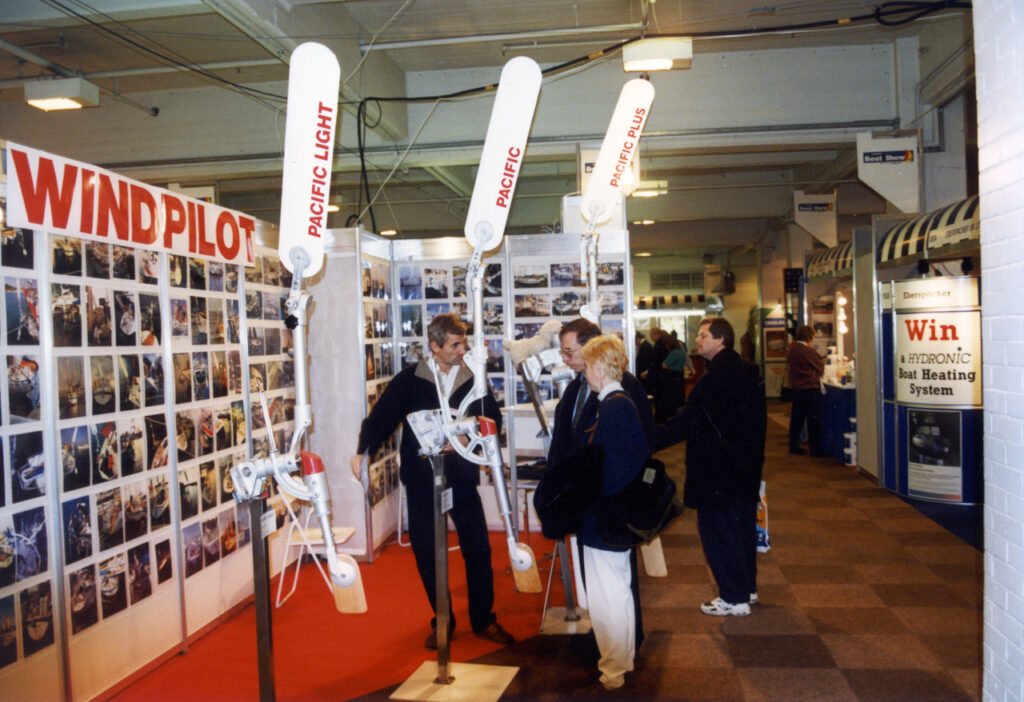 When Derek Daniels, inventor of the Hydrovane and long-time owner of the brand, approached me at the London Boat Show in 2000 to see if I might be interested in acquiring his business, the very first thing I asked him was whether my PACIFIC PLUS was giving him sleepless nights. Just a shot in the dark! He explained to me that he had no desire to redevelop his systems and was instead ready to pass on the baton. Derek was at that time selling something like 30 Hydrovanes a year, all of them – as remains the case today – manufactured (on a very small scale), packaged and shipped at
credit Derek Daniels
Unit 4, Prospect Court, Prospect Close,
Lowmoor Business Park,
Kirkby-In-Ashfield, Nottingham, Nottinghamshire NG17 7LF, England
tel. +44 01623 758938
Note that the first of the two workshop photos was taken in the old facility at 117 Bramcote Lane, Chilwell, Nottingham,
, aufgenommen wurde, while the second shows the current premises.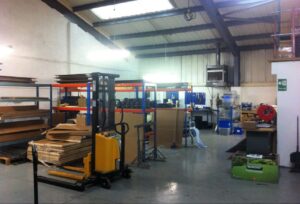
The business passed in due course to John Curry of Vancouver, Canada, for a price I will never forget. I could have purchased the trademark to remove it from the market, but I had faith enough in my design concept to consider that unnecessary (a decision I stand by still). Being understandably curious about the movers and shakers in his new line of work, John got in touch not long afterwards. And then I sat back to watch – with interest – what the future had in store for the Hydrovane brand.
I always enjoyed a very good relationship with Derek over the decades, just as I did with Nick Franklin, for whose Aries I served as representative in West Germany for many years (once Franz Wiss had finished readying his boat and cast off to see the world).
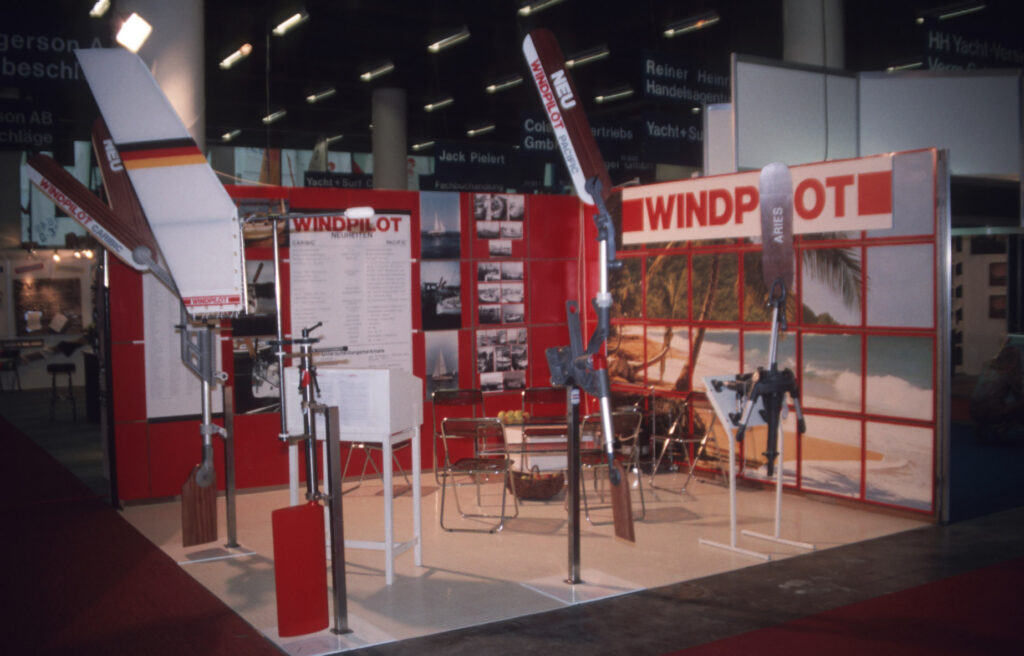
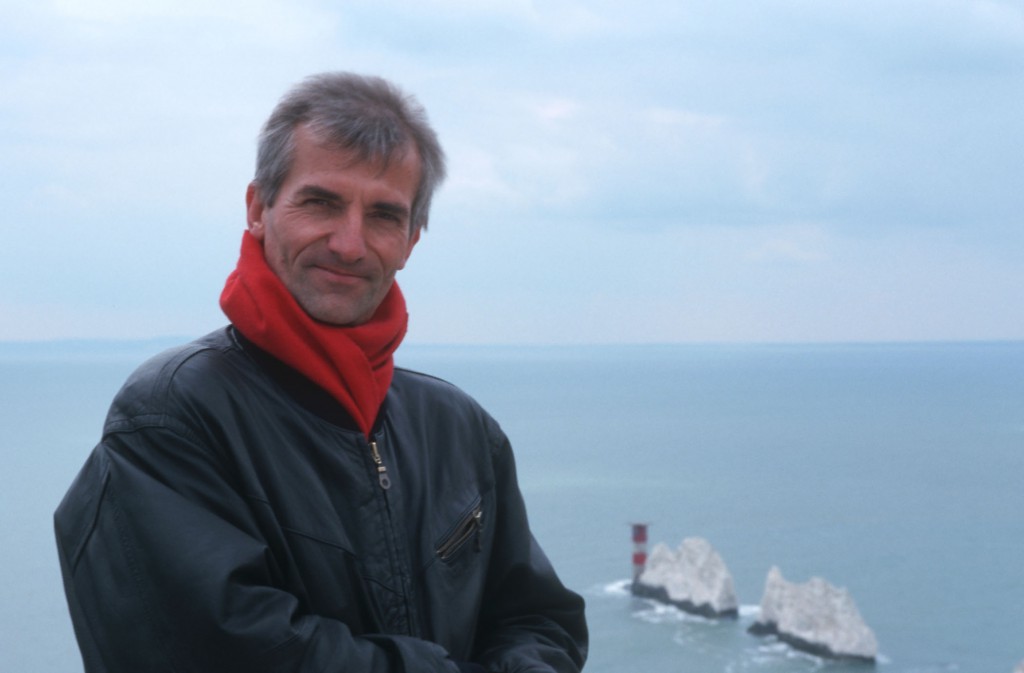 As Nick once remarked with a grin as we sipped tea on his terrace on the hill above Cowes on the Isle of Wight, “The world is big enough for all of us.” Aries and Windpilot systems perched happily side by side on my boat show stands for many, many years.
 Good relations were standard operating procedure with Derek too. His German Hydrovane representative, Ed Schäffler, was a sailing friend of mine and the importer of Westerly and Moody yachts in Hamburg. My friend Peter Schweer and I put the Westerly Fulmar through its paces both in magazine product tests and on the race course, and gave the other contenders on the North Sea circuit ample opportunity to admire our broad transom advancing into the distance!
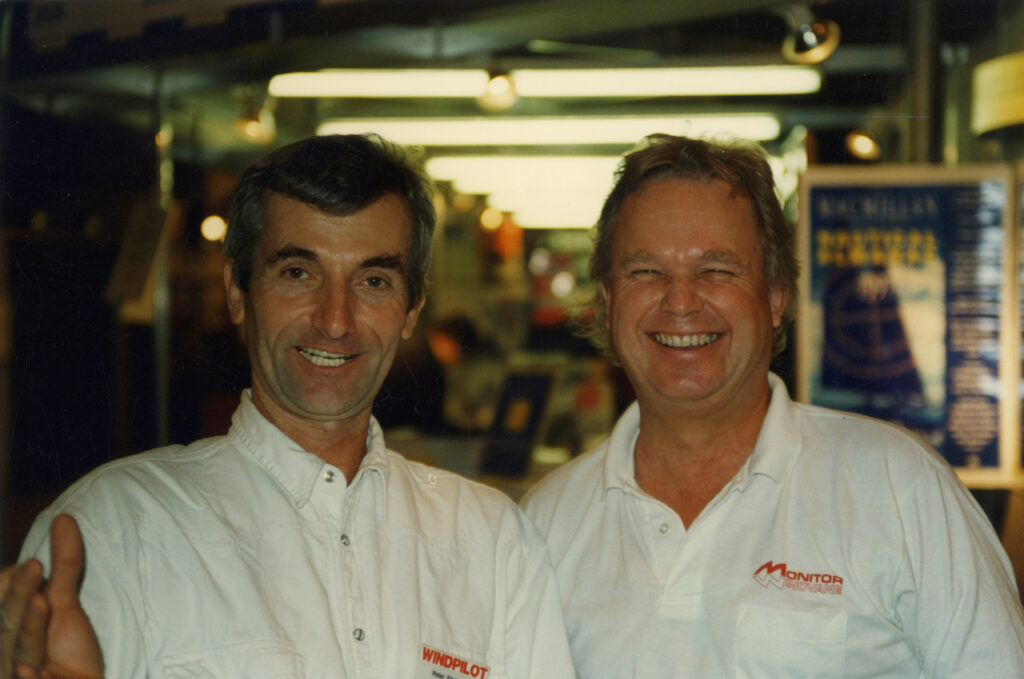 Cordiality was always the order of the day when Nick, Derek, Hans (Bernwall) and I convened at Earls Court every year for the London Boat Show too. Hans never shied away from sharing his view of our world, which featured himself as the “king of the wind vane market” – presumably because at that time he was acting as reseller of a whole menagerie of different systems from his workshop showroom in Sausalito (and wherever else he might happen to pitch his tent). In 1998 a jovial Hans invited me, the “Prince” as he put it, to visit him at his house overlooking San Francisco Bay for a barbecue. He grilled; I assisted. I showed Hans my book SELFSTEERING UNDER SAIL prior to publication and he was sufficiently impressed to contact publishers Adlard Coles in London and request an advertisement at the back. This of course all happened before the book was published and all hell broke loose for me.
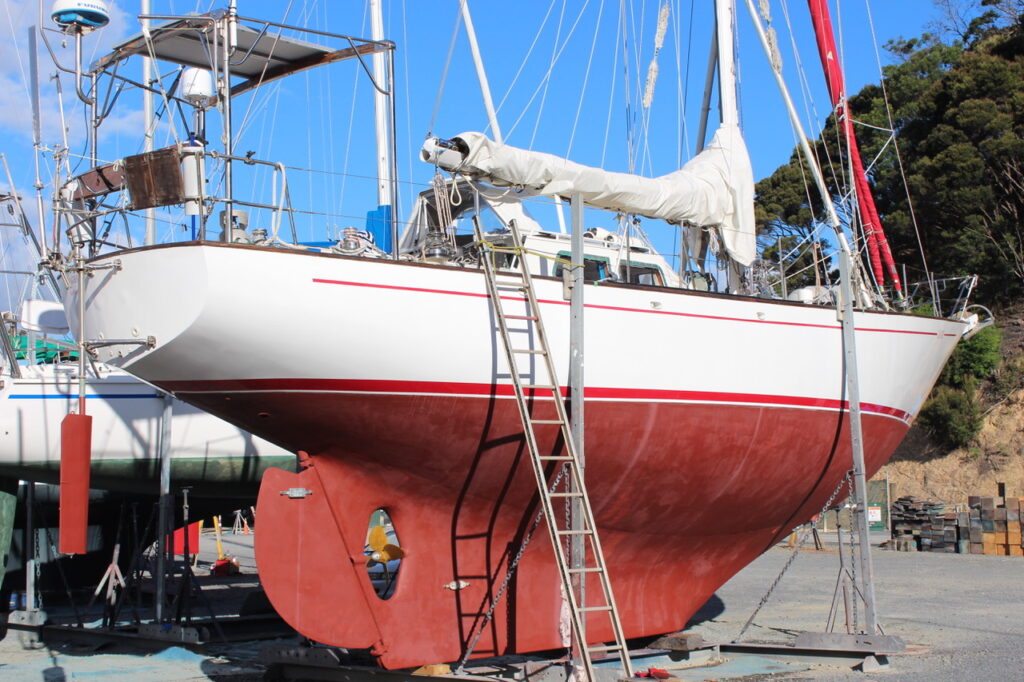 Oh yes, those were the days! I had just come back from San Diego after visiting Kevin Fleming and his copycat of my Pacific Plus, expressing my feelings on the subject with candour (if not brevity) and listening to him squawking like a parrot: “So sue me then, just sue me!” I paused on the way home to drop in on Stellan Knöös of Sailomat in La Jolla and put some old traumas to bed. Stellan passed away on 1 April 2025, his brand now dormant.
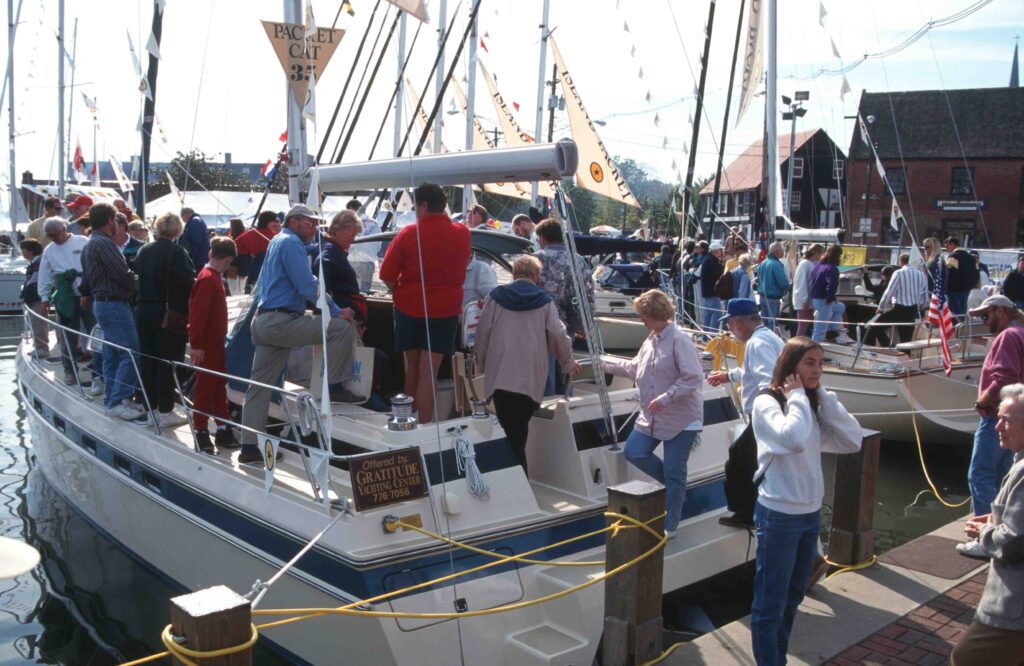 Back then my extended travels all came under the umbrella of business trips for official purposes. My yacht of the time was officially an asset (a depreciating asset) of the business too and the opportunity to use it for myself was no more than a perk of the job. I should have saved myself the effort: when I sold the boat concerned many years later, the tax office jumped on me for value added tax on the selling price, thank you very much, plus a little something to cover my net profit on the sale, given that I had written its value down to one solitary Deutschmark. What initially looked like a good idea ended up costing me half the value of the yacht, and from then on I kept my boats on my private balance sheet even though almost all of them felt the gentle caress of my drill as I perforated their transom to test my various systems and prototypes.
John Curry began selling bluewater equipment under the Hydrovane brand shortly after acquiring it. The Hydrovane team is introduced here. One of the three UK staff listed is the late Ted Hargreaves, whom I remember meeting at Earls Court back in the day.
But back to the story…
MARKETING DECISIONS
I confidently expected to see a new Hydrovane model launched on the boat show circuit in short order. But it never happened. John Curry chose a different course: instead of changing the product, he changed the marketing concept. My first inkling that things were not as they had been came on the dockside in Las Palmas ahead of the ARC: suddenly my presence there was no longer welcomed – although it would be tolerated if I was prepared to pay for the privilege. John Curry’s original idea then was to go into partnership with the organisers of flotilla events around the world.
An emergency rudder soon became mandatory for the ARC and the Baja Ha-Ha, which the media interpreted as a safety measure and treated as such in their reporting. For my competitor in Vancouver, investing in this marketing innovation surely appeared much more cost-efficient than redesigning the decades-old Hydrovane, which bounced back from seemingly near-oblivion as a result. A windvane self-steering system that had all but passed into history thus made its way back onto the shopping list for many sailors in need of an emergency rudder to go with their self-steering. Performance in practice did not necessarily rank as the number one criterion: buying a Hydrovane had become just one more hurdle to jump in the process of gaining entry to the event.
If only ambitions hadn’t extended to the Golden Globe Race! What works in the ARC and the Baja Ha-Ha will not necessarily hold up just as well in the GGR. Flotilla events don’t tend to be short of sailors willing to take a turn at the helm and in any case, passages extend to no more than a few thousand nautical miles and then the focus shifts back to restaurant bookings and wine lists. How well a windvane self-steering system actually works plays a secondary role – at best – in events like these.
The GOLDEN GLOBE RACE operates according to a completely different set of rules: in a nonstop singlehanded event, nothing matters more than reliable self-steering. How well a windvane self-steering system performs when it really counts determines not only the skipper’s level of sleep deprivation, but also his or her prospects of winning – or even just making the finish – without undue drama. Performance in practice also of course has a direct effect on the mental state of the event organiser and his sponsor.
That John Curry and Don McIntyre should decide to partner up in the way they did has always puzzled me. Throughout the countless conversations I have had with sailors considering or committed to entering the GGR, I have always recommended the servo-pendulum option. I have not encouraged any of them even to consider my PACIFIC PLUS double rudder system, and I certainly haven’t sold any for the GGR. A robustly mounted auxiliary rudder system (riding in the shelter of a substantial long keel) can become dangerous in the deep South when wind, weather and sea state begin to bite. A rigid auxiliary rudder (a rigid auxiliary rudder with a shear pin, no less) not only presents the orcas with an interesting artifact to investigate but will also tend to snag and retain a surfeit of the nasties that float on or just below the surface of the world’s oceans.
That the unit must be firmly attached to the transom should go without saying. The more profound issue is the strength of the transom itself and the reliability of the structure attaching that transom to the rest of the boat. A servo-pendulum system makes relatively limited demands of the transom: essentially nothing more than a seagoing lever, all it has to do is produce adequate steering force to move the tiller or wheel. The difference is enormous, as the investigations to follow will demonstrate. It makes interesting reading, that I can assure you!
To be continued…
Hamburg, 24th September 2026
Peter Foerethmann