THE WINDPILOT PHILOSOPHY
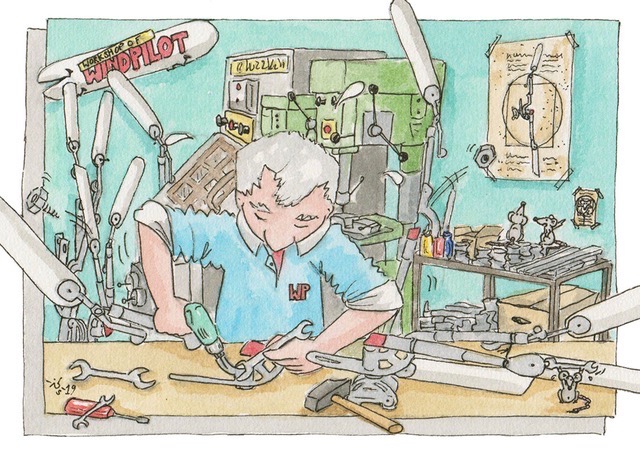
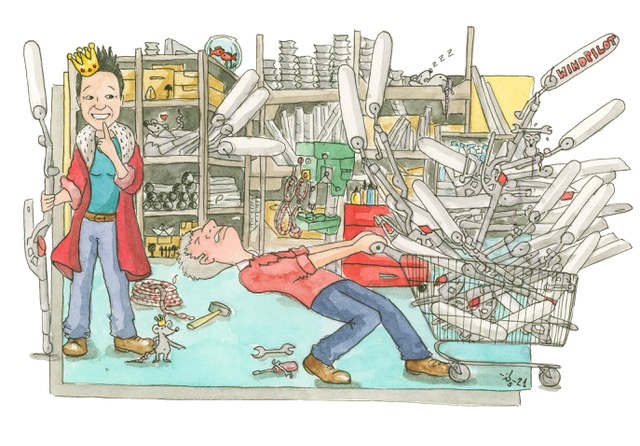
 Every mistake begins with a thought – or lack of thought – in the head of someone, somewhere. I am always on guard for nascent catastrophes brewing in my own head: catching them quickly and ensuring they never make it into production (both figuratively and literally) is vital to protect my customers and my brand alike. Merciless as it may be, the market is thoroughly consistent, so word of mouth works reliably in both directions (even to the point of killing a brand off altogether if every last potential buyer fully grasps the facts). When it comes to helping us see things as they really are, the sea is absolutely relentless.
I enjoy sharing my knowledge and my ideas and have set down what I have learned in a number of books. Reflection, trial and error have led me to a strategy that enables me to survive and hold my own in the market. Five decades of experience in the transom ornamentation business constitutes an asset that should not be underestimated. I see what I see, a decidedly complex web of interrelated factors all ultimately tied in to just a single goal: to spare weary sailors hard labour at the wheel. The passion for adventure at sea that drives us to undertake long voyages beyond the far horizon can be rapidly extinguished by the drudgery of endless steering. My mission is to ensure that does not happen.
An arduous business mine can be, but never boring. At the age of 79, I still believe a generous measure of humility to be vital: I may have sold many thousands of systems over the years, but learning the lessons that come my way and embracing the necessary conclusions remains as vital as ever. I still would not have it any other way. Forgive me for the complexity of my observations; the subject is complicated, encompassing as it does so many different fields.
The root cause of all this contemplation is the GOLDEN GLOBE RACE, which has turned out to be the test of all tests for the technology that has fascinated me all my working life. So, where to begin?
DIE 12 SYSTEMARTEN
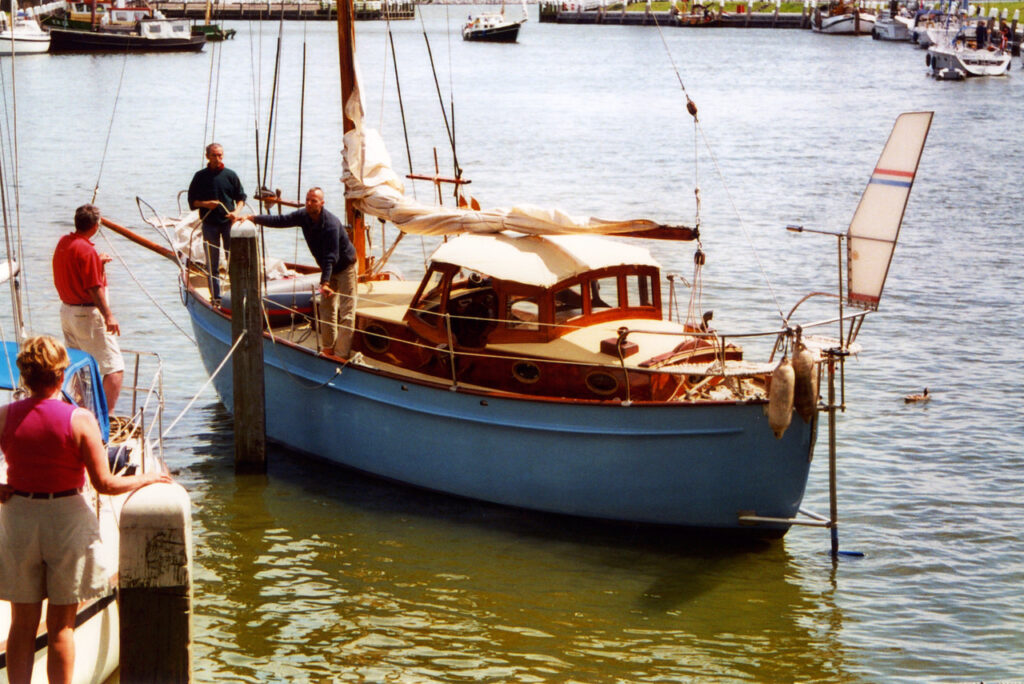
THE TWELVE SYSTEM TYPES
I have built all of them at one time or another. I have drilled countless holes in dozens of my own boats, I have relentlessly teased out advantages, disadvantages and differences, I have drawn my conclusions, and I have invested. Some 28 years ago or so, I launched a modular family of products that incorporated everything I had learned over the preceding twelve years with my sand-cast PACIFIC and PACIFIC PLUS sisters. Time spent gaining understanding is seldom wasted. Sending my systems off to sea to be tested in practice taught me things I needed to know (including the areas in which I needed to do more thinking), helped me figure out what really matters and ultimately led me to some crucial insights. I aimed to make my decisions with head and heart in harmony – and it worked.
I have shipped thousands and thousands of windvane self-steering systems over the decades, from the initial ATLANTIK models to the current PACIFIC systems. I have always kept a close eye on trends and developments in the mass-produced yacht market and have adapted my systems and my ideology steadily as required. Windpilot gears embody the experience of thousands of sailors and millions of nautical miles sailed – and they are still out there adding more miles every day, which makes product optimisation a never-ending process (at least while I am here to drive it). Yes, I am proud of what we have managed to achieve!
What have I learned over all these years? Here goes…
THE LESSON FOR TODAY: AUXILIARY RUDDER SYSTEMS AND SERVO-PENDULUM SYSTEMS COMPARED
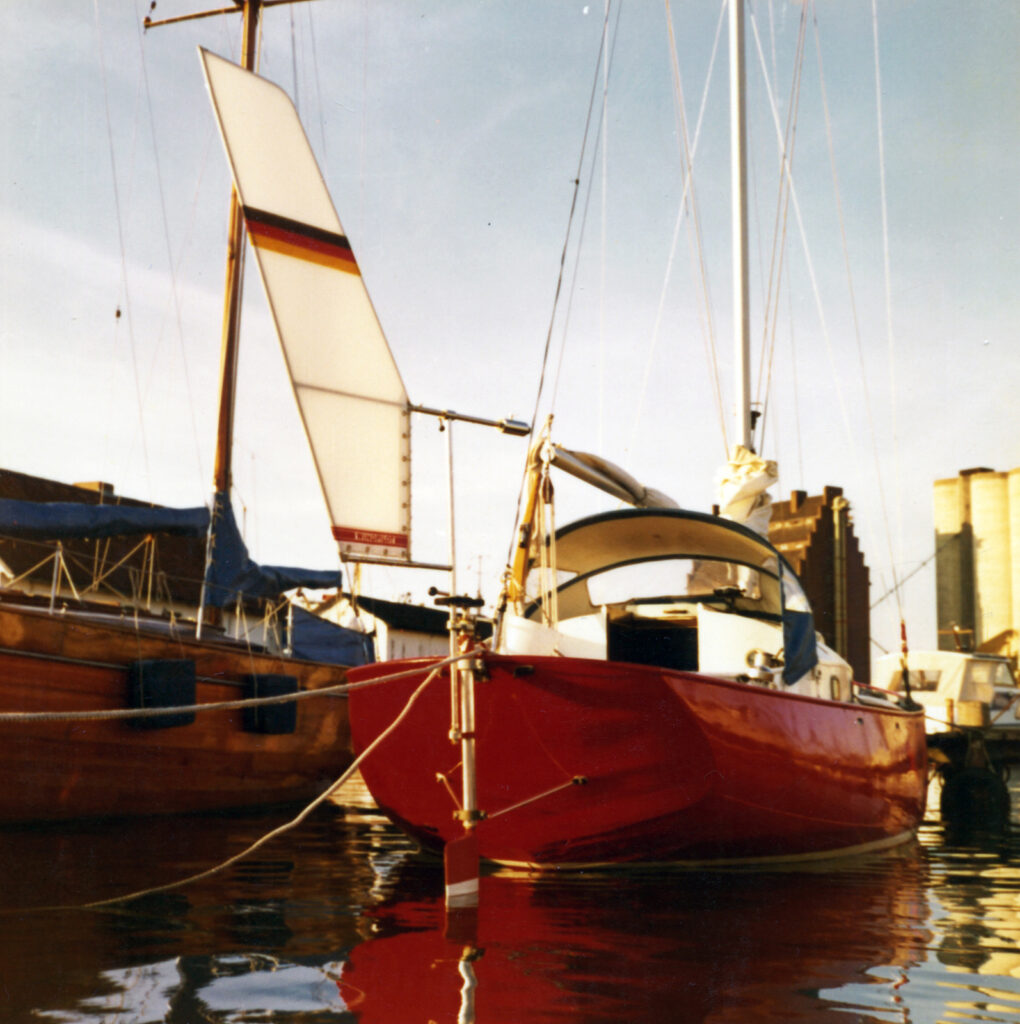
John Adam set off on a great adventure in 1967 on a Leisure 17 with the first Windpilot system at his back. He lost the boat, Eve, in a hurricane off the coast of Cuba, landed in a Cuban prison and then, after weeks of uncertainty, flew home hale and hearty with a wealth of new life experiences in his hand luggage. He had a big new idea brewing too, and it quickly blossomed: Windpilot was born. Auxiliary rudder systems appeared the logical way to provide reliable steering for small yachts. When sailors began to dream bigger dreams, so those auxiliary rudder systems grew bigger in step. NORDSEE II, ATLANTIK III and ATLANTIK IV they were called, and they made good sense for boats up to about 36 feet in length. Larger and heavier boats demanded meticulous trimming: neglect to keep everything nicely balanced and manual steering would be unavoidable.
The laws of physics dictate that auxiliary rudder systems can never be all that powerful: the design relies on just the windvane itself to generate the force needed to move the rudder, so they cannot match the capabilities of servo-assisted systems.
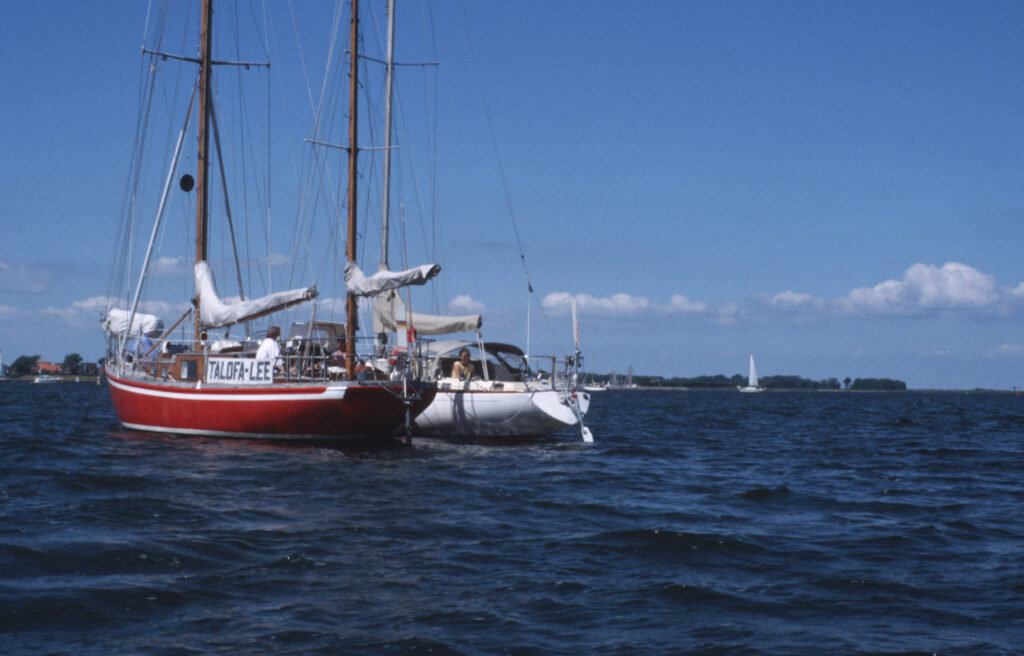 The PACIFIC model, in stainless steel, was produced for larger yachts. I put countless variants through their paces on the way to identifying what I consider to be the perfect solution, the configuration I continue to regard as the state of the art. I am still selling essentially the same design today because I still have not found any way to improve on it.
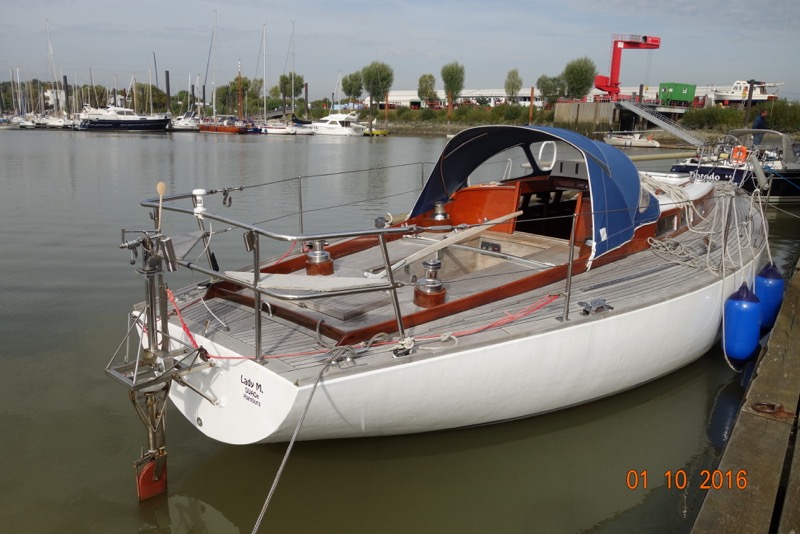
Optimist MEX, Claus Hehner
THE SERVO-PENDULUM DESIGN IN PRACTICE Servo-pendulum systems generally ask relatively little of the transom in terms of strength. The pendulum rudder rotates at the end of the long pendulum arm, which responds by swinging out to the side and pulling on the lines that connect it to the tiller or wheel. The weight of the unit itself (approximately 20kg) and that steering force transmitted through the lines is all the load the self-steering system passes to the boat. The situation with auxiliary rudder systems is very different.
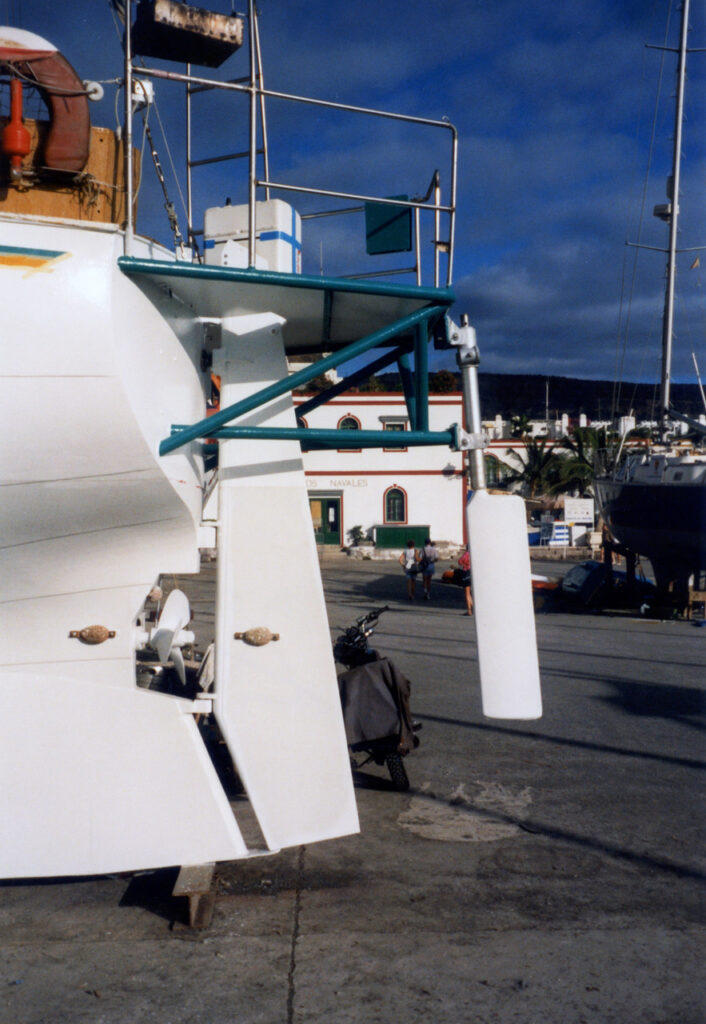
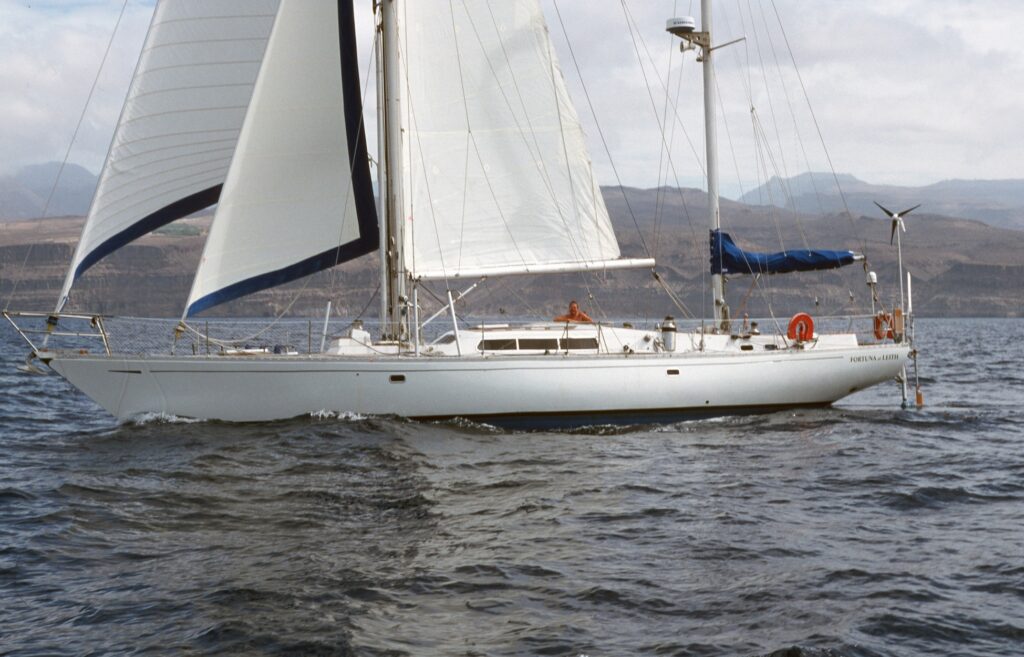
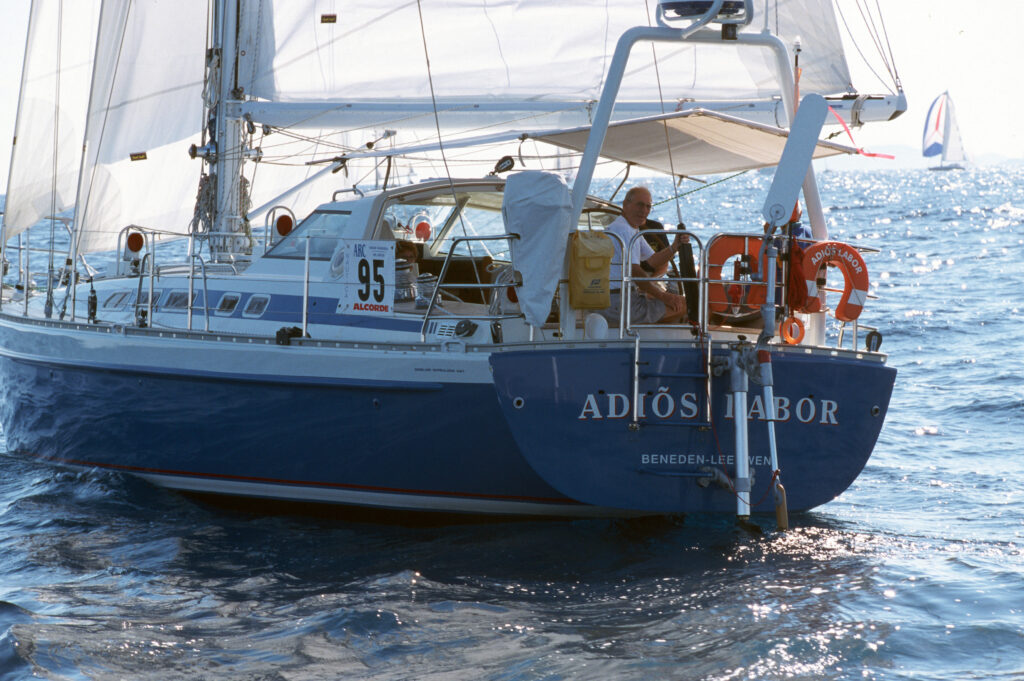
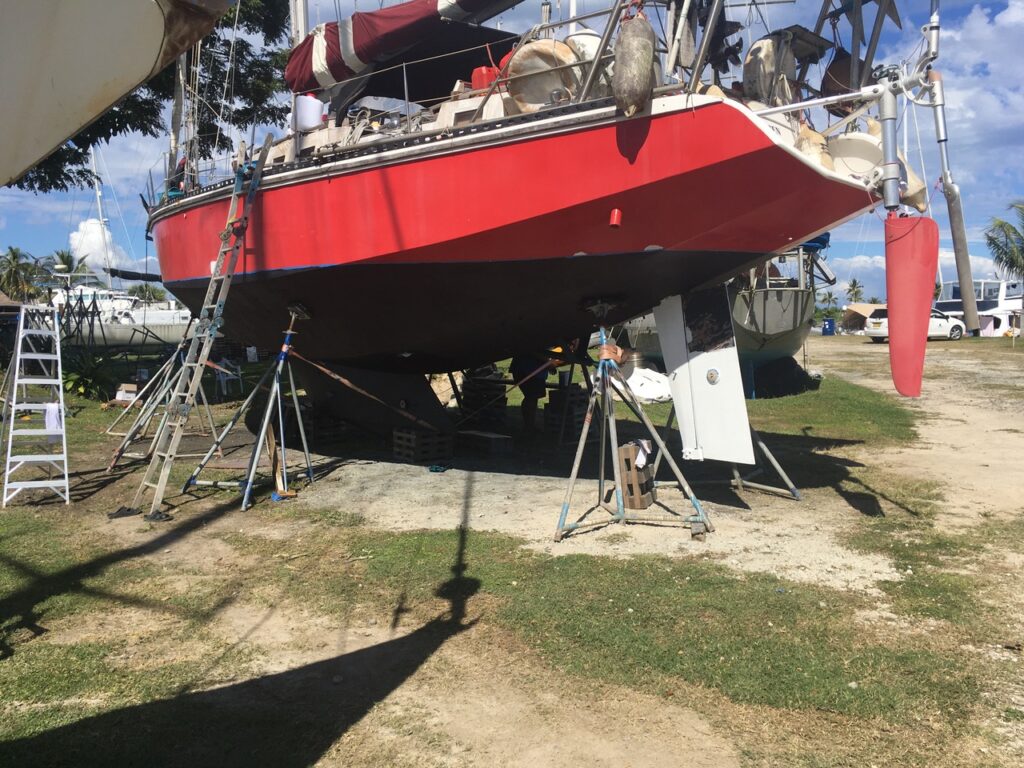
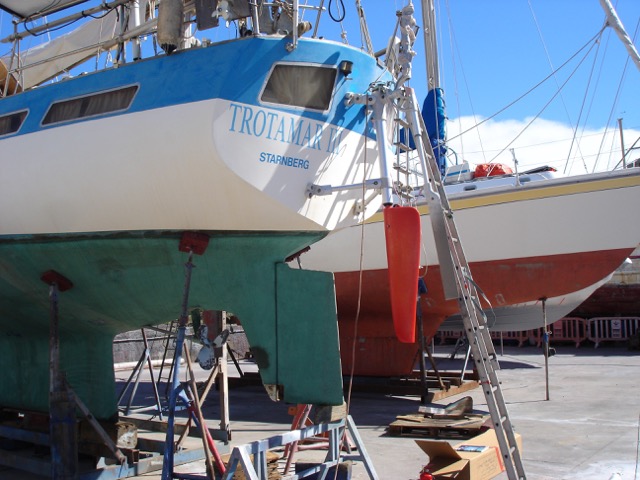
THE AUXILIARY RUDDER DESIGN IN PRACTICE The ideal ratio of main rudder area to auxiliary rudder area is 3:1. A smaller auxiliary rudder will not be able to maintain control. The ideal position on the transom is invariably right in the very centre. Every centimetre of offset will make its presence felt. Poor steering is assured if the mounting point wanders too far from centreline, not least because with any heel, the rudder will be too deep in the water to work effectively on one tack and too far out of the water on the other. The maximum offset I used to accept for these basic systems with no servo assistance was 25 cm.
 ATTACHMENT TO THE TRANSOM
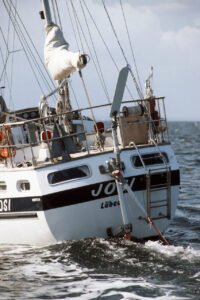
Robust attachment is always essential because of the enormous forces transmitted due to the dynamic loads from waves and the movement of the boat. The upper and lower mounting points on the transom should be as far apart as possible. The vertical distance between the upper and lower mounting clamps on my ATLANTIK systems was always in the region of 100 cm. The lower mounting point should be close to the bottom edge of the transom where possible. Struts should always be arranged symmetrically, with both sides at an angle of 45 degrees to the transom, and should always be bolted on close to the edge of the transom where the local material strength is greatest. The angle between the struts must of course be such that the system is robustly mounted with no play, and paired struts must be both identical to each other and arranged at exactly the same angle to the transom. The pressure and tensile forces acting on the system must be transferred symmetrically. Note that flat transoms are less robust and therefore less resistant to vibration than curved (convex or concave) surfaces.
DIMENSIONS OF AUXILIARY RUDDER SHAFT SLEEVES AND RUDDER SHAFTS NORDSEE – ATLANTIK III Shaft sleeve 54 mm, rudder shaft 30 mm, four M8 mounting bolts ATLANTIK IV Shaft sleeve 60 mm, rudder shaft 42 mm, four M8 mounting bolts CARIBIC Shaft sleeve 60 mm, rudder shaft 40 mm, eight M8 mounting bolts Mounting clamps: aluminium-bronze clamp with a machined inside face clamping a stainless steel sleeve, bolted tight so as to be form-fitting, no plastic between the components
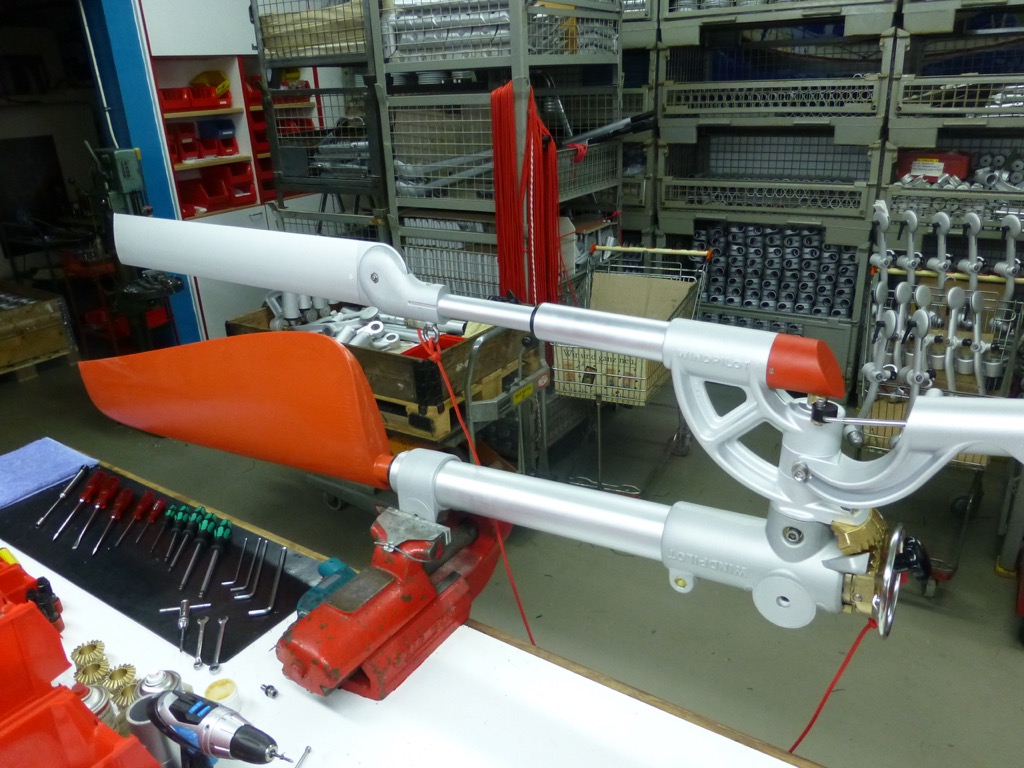
RUDDER SHAFT DIAMETER – PACIFIC PLUS Shaft sleeve 90 mm, rudder shaft 30 mm superduplex, eight M10 mounting bolts Mounting clamps: cast aluminium with machined inside face clamping an aluminium sleeve, bolted tight with M12 fastenings so as to be form-fitting, no plastic between the components
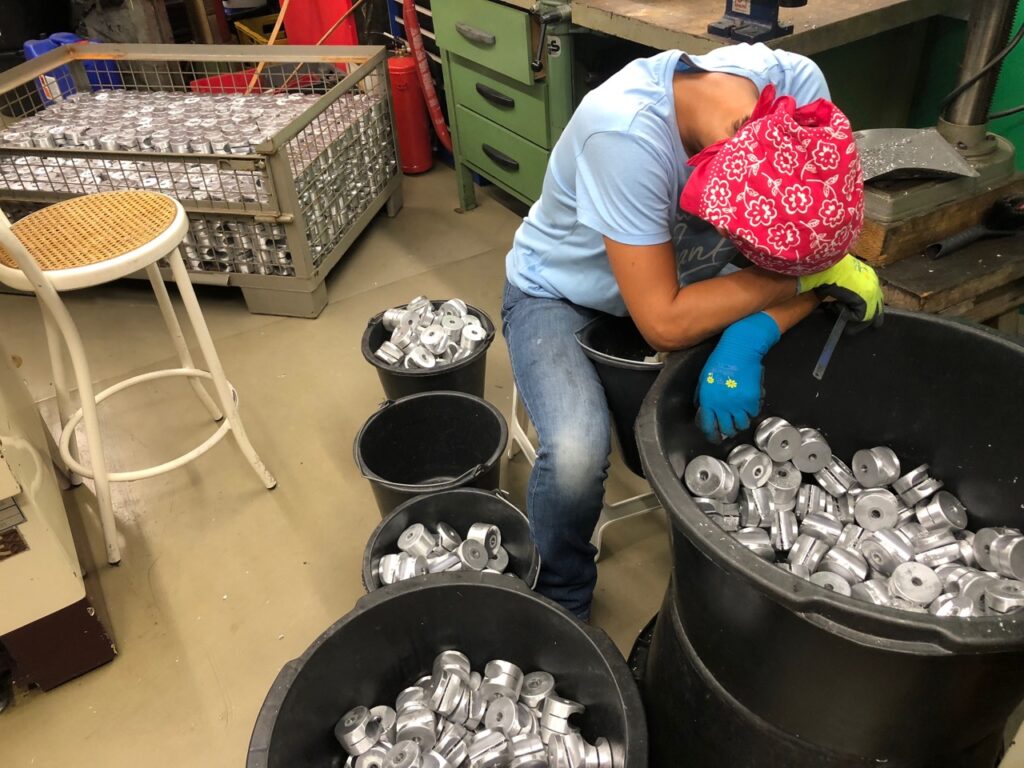
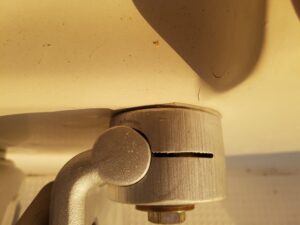 THE CLAMPS for all systems are always machined on the inside face so that they match the diameter of the corresponding shaft sleeve perfectly for form-fitting mounting. Nothing (including plastic materials) should ever be inserted between the castings because this makes it more difficult to achieve a robust connection. Bear in mind that virtually all yachts have an at least slightly curved (convex/concave) transom. The mounting components of an auxiliary or double rudder system should/must adapt perfectly to this curvature to ensure the mounting arrangement transmits all loads evenly.
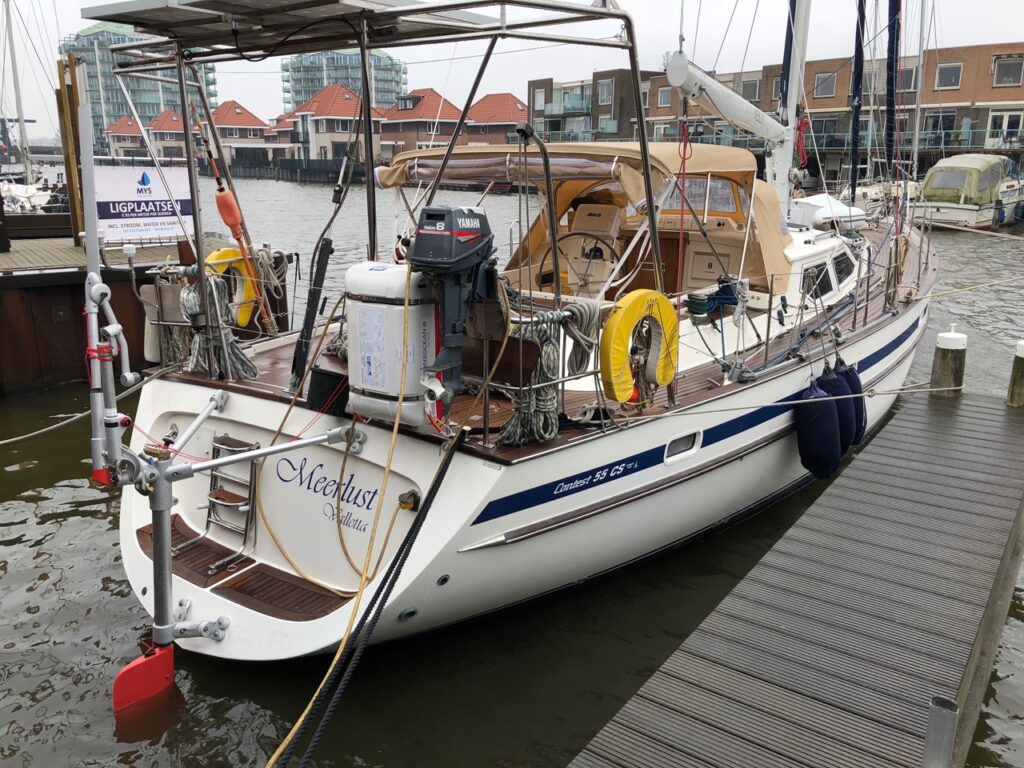
 RUDDER ON CENTRELINE
All types of auxiliary and double rudder systems need to include a reliable mechanism with which to fix them on centreline to minimise vibration under engine and when the self-steering system is not in use. An auxiliary rudder that is fixed in the central/zero position also adds to the effective lateral surface area, and lateral surface area at the back of the boat means better course-keeping irrespective of whether the system is actually doing the steering.
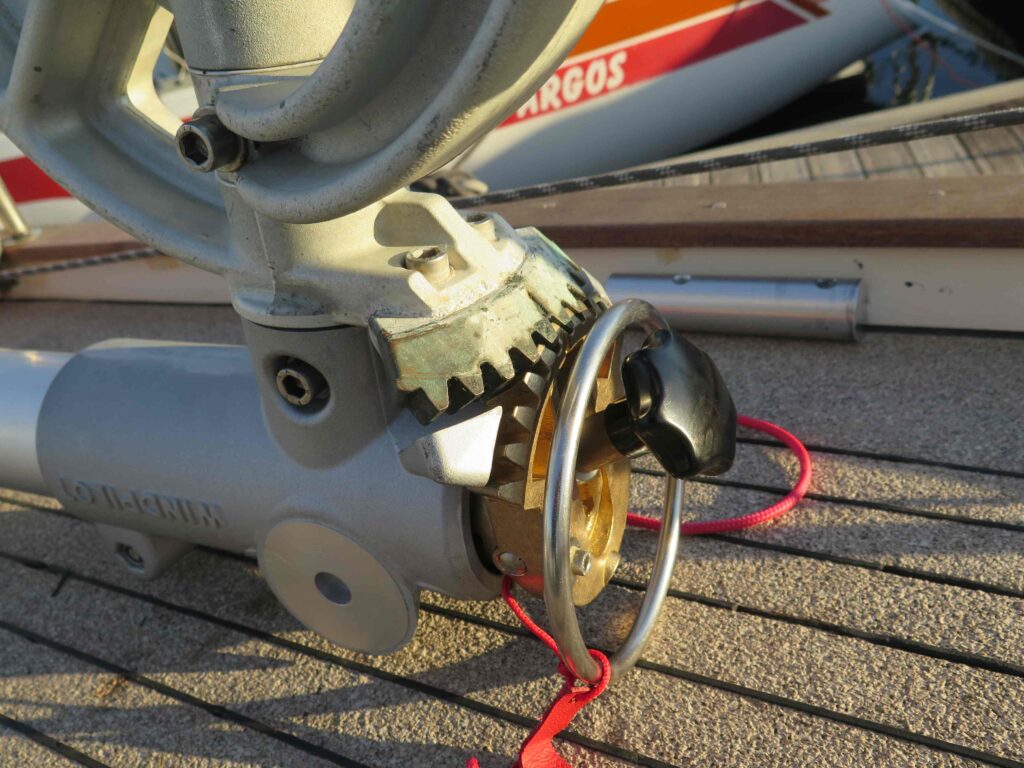
A robust centreline locking mechanism is essential to avoid vibration. The mechanism on PACIFIC PLUS systems provides approximately 3 degrees of continuous adjustment either way to compensate for factors such as propeller effects. The ATLANTIK series has two adjusters that engage on both sides with tapered drilled holes in the rudder shaft. This solution was adequate for the power of the inboard motors used at the time.
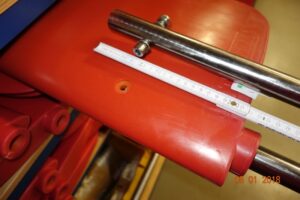 A stronger design was required for the PACIFIC PLUS systems. Here, the coupling segment latches in the park position with a conical segment that is designed as a wearing part and can be replaced easily. The entire coupling must be adjusted and tensioned regularly to ensure the connection remains tight and reliable. The Nyrim auxiliary rudder on PACIFIC PLUS systems is firmly attached to the shaft with through-bolted M10 fastenings and doubled-up serrated lock washers.
MOUNTING BOLTS THROUGH THE HULL should ideally be secured with regular nuts plus check nuts. Lock nuts alone are not a reliable option.
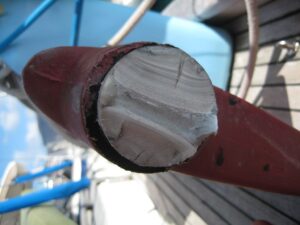 VIBRATION IS THE ENEMY OF ALL MATERIALS
It takes a particularly strong locking mechanism to fix the auxiliary rudder on centreline reliably on larger boats with more powerful propulsion systems. A reliable mechanism is essential to combat vibration, which can otherwise wreak havoc in:
– the auxiliary rudder components, where it can be countered with conical or threaded locking mechanisms,
– the transom, due to inadequate material strength or completely planar transom surfaces (as is the case with virtually all flat sterns – see RUSTLER 36),
– the rudder blade, if/because the wake from the keel flows across it asymmetrically (and, in the case of significantly offset mounting, because the water on opposite sides of the rudder blade may be flowing in different directions).
There is one key question I always ask anyone considering one of my PACIFIC PLUS units: is the transom laminate strong enough to cope with the loads that would be placed on it? If the surface of the transom is convex or flat, robust reinforcement will be needed on the inside. Concave surfaces have inherently better dimensional stability. The additional reinforcement required inside the transom can sometimes be quite substantial. Washers and similar will seldom suffice to prevent vibration and distribute point loads to the wider structure. I decline as a matter of principle to supply the Pacific Plus for many yachts on the grounds that there is no practical way to beef up the transom adequately. Having studied in detail how the yards actually build many of our more prominent production yacht designs, I am well-placed to advise owners and to ensure they are never able to buy from me a system that will not work for their boat.
LOGISTICS, PACKAGING AND SHIPPING
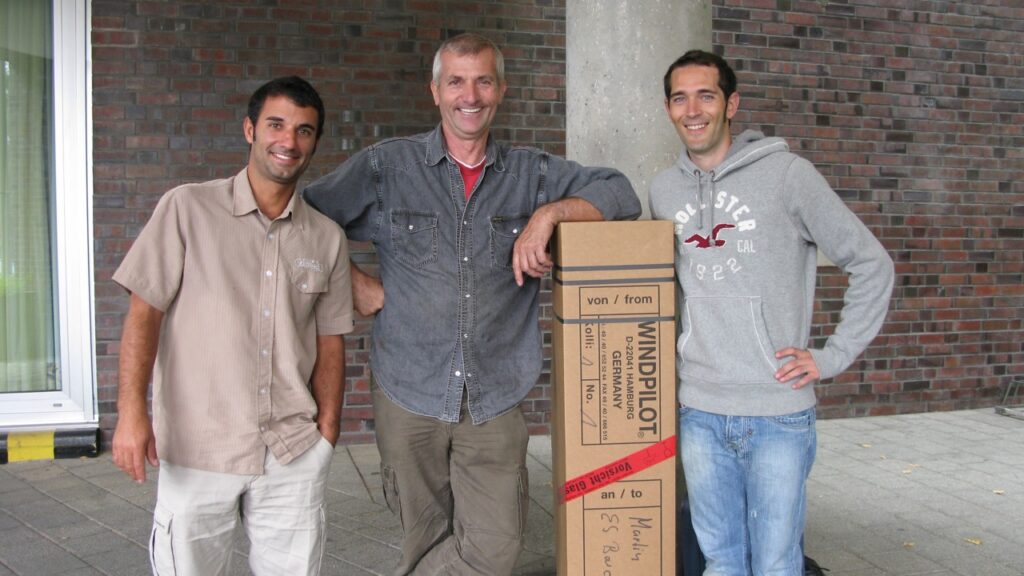
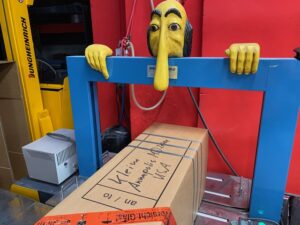
Back in the day Windpilot shipped thousands of Atlantik systems in tough 2.2 metre boxes – a Herculean task strictly reserved for the strong of arm. When I updated the design of my systems, I made sure to incorporate a removable auxiliary rudder blade. This change, which greatly simplified our logistics, opened up both new possibilities and new dangers in respect of vibration. The newer models made reliable immobilisation on centreline when not in use even more important, a factor all designers would do well to consider. Having to explain every so often to an owner of my PACIFIC PLUS that the coupling elements have clearly not been monitored and re-tightened as instructed and that this could eventually cause the substantial Pacific Plus rudder shaft to break has never ranked among the highlights of my job. Keep an eye on the coupling elements and tighten them immediately when necessary: my manuals could not possibly be any clearer on this point! Sustained rattling noises from the transom indicate a problem that needs addressing promptly. Failure to act is likely to result in material fatigue or failure – with expensive consequences.
 ORCAS AND OTHER OCEANIC IMPONDERABLES
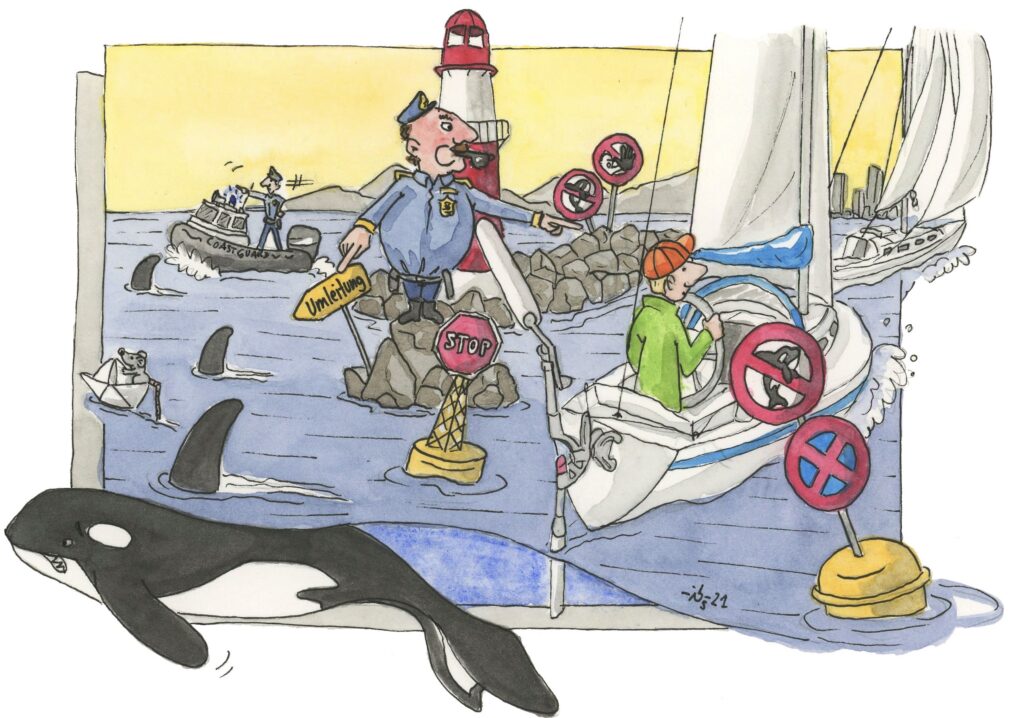
Nothing beats a streamlined underwater hull form that elegantly glides over anchor chains, buoys and fishing nets without a hint of a snag simply by virtue of its smooth contours. An auxiliary rudder trailing behind everything at the end of a long lever presents the opposite situation. That isolated auxiliary rudder blade extending down into the water unprotected makes the perfect trap for all manner of seaborne objects organic and otherwise. Many is the yacht that has come to a sudden halt in that way with plenty of depth under the keel.
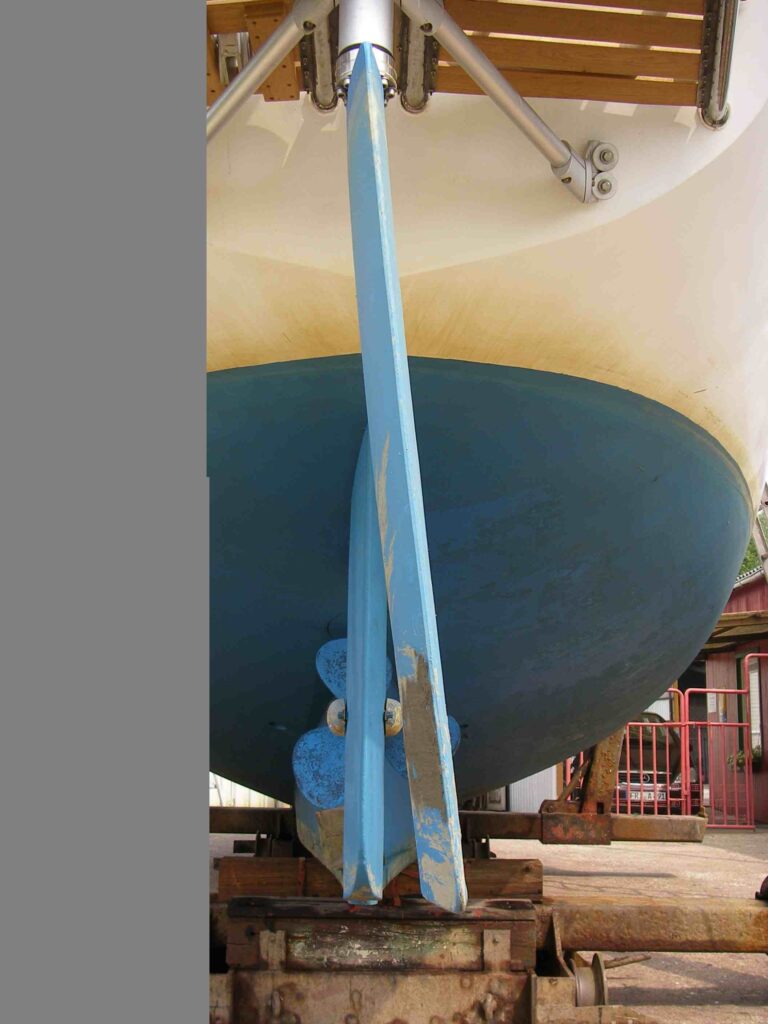 Recently the orcas have taken a liking to auxiliary rudder blades too. I gather they have already helped themselves to a fair few.
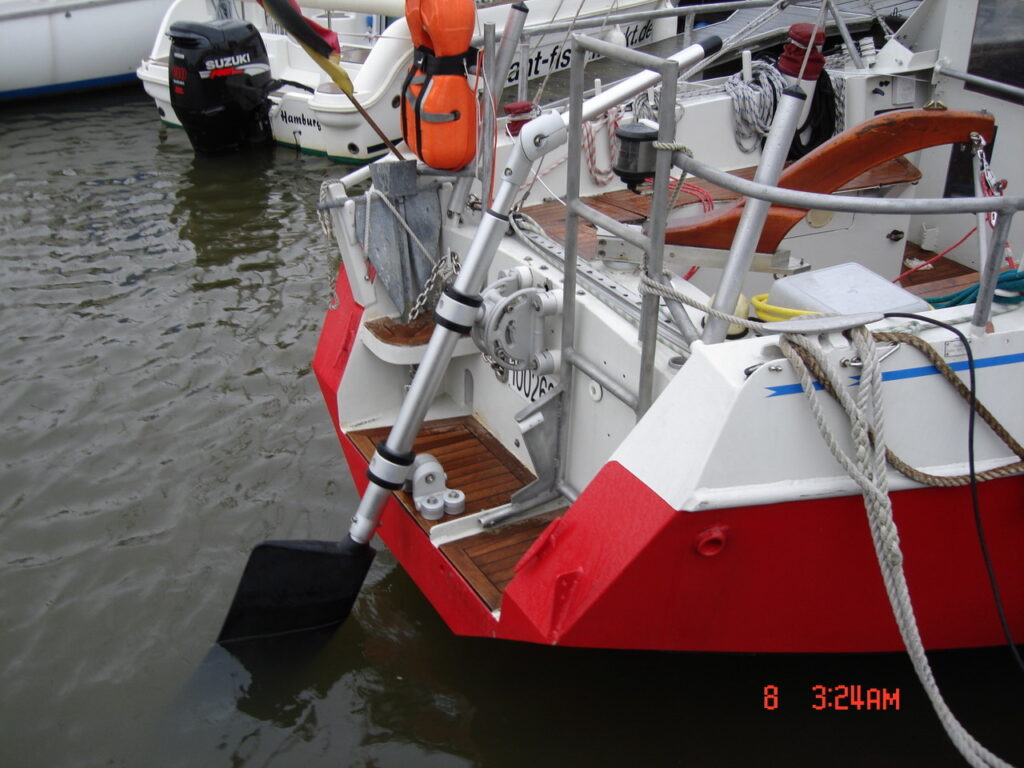
EMERGENCY RUDDER – A HOT TOPIC
Who would ever dare to question the logic of carrying an emergency rudder capable of steering the boat home safely in extremis? If only it were that simple! Looking at contemporary production GRP yachts, with their mass-produced foam-cored main rudders lacking the protection of a skeg and a third rudder bearing, it is easy to understand why a skipper might take comfort in the thought of an auxiliary or double rudder system perched at the back. There are, however, certain other thoughts that same skipper would do well to entertain. The auxiliary rudder blade will typically be no more than about one third the size of the main rudder, for example, so it would be unreasonable to expect it to be able to steer the boat properly in the absence of the latter (although careful sail trim will always help).
Another option now available to skippers in search of some extra peace of mind is an emergency rudder. Here too the strength of the yacht’s hindquarters is critical: what use an emergency rudder that itself becomes a liability at the critical moment due to inadequately robust mounting?
Cardinal sins – broken rudder
Cardinal sins – rudder/main rudder bearings
Those who choose to sail traditional yachts with a long keel have the unending pleasure of never having to worry about such things: a robust rudder tucked away on the trailing edge of a long keel removes a whole host of worries.
Es sollte allerdings unbedingt auf die Solidität der Bauweise des entsprechenden Schiffes im achteren Bereich geachtet werden, denn was nützt ein Notruder, das selbst im Ernstfall in Seenot gerät, weil z.B. die Befestigung nicht hält, was sie verspricht?
Sündenfalls Ruderbruch
Suendenfall-ruder/hauptruderlager
Those who choose to sail traditional yachts with a long keel have the unending pleasure of never having to worry about such things: a robust rudder tucked away on the trailing edge of a long keel removes a whole host of worries.
 FITTED AT THE YARD OR DIY?
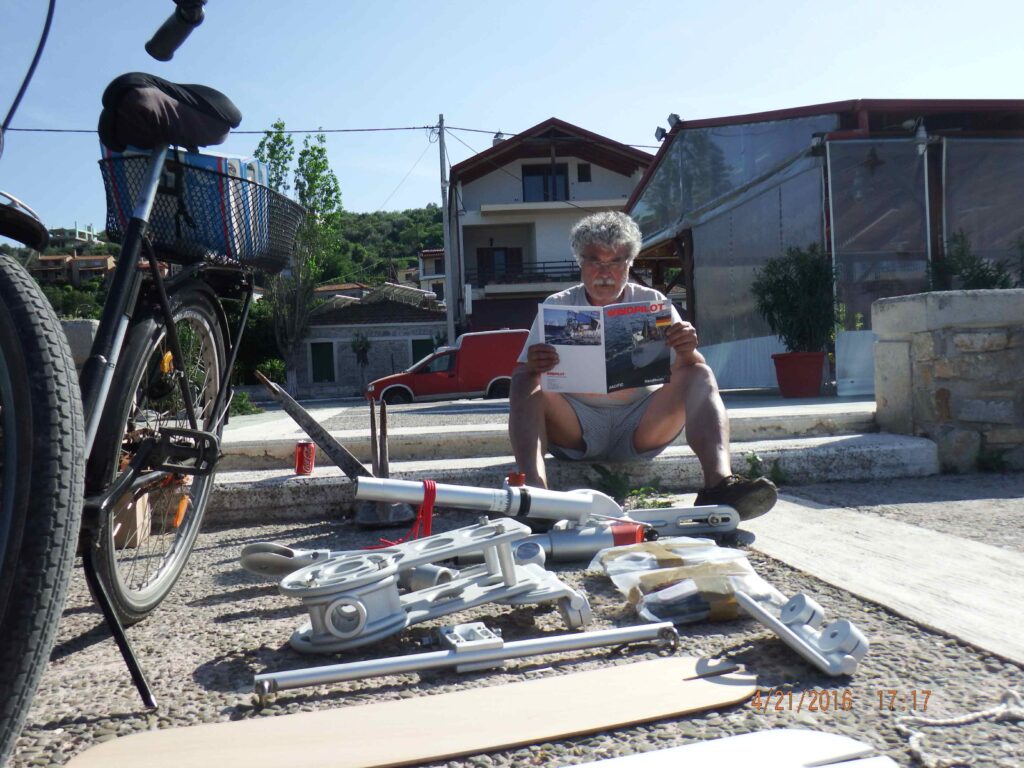
I have designed all my systems so that they can be installed by the owner. My extensive system code database makes it easy for me to supply sailors all over the world with exactly the mounting components they need. All my systems have an adjustable mounting bracket for installation and will conform perfectly to the curvature of the transom for a precise fit and dependable load transfer. I supply a detailed manual and request everyone who installs one of my systems to document their results so that I can check and confirm everything is as it should be. I keep a record of these requests in my database and send out reminders from time to time to anyone who has yet to share a photo of their work. Already having photos on my system comes in particularly handy if a customer should happen to contact me at some point with concerns about sub-par self-steering: the combination of the customer’s description and the visual evidence on my screen often gives me all the information I need to isolate the problem and prescribe a solution.
Without in any way wishing to impugn the boatbuilding profession, I believe the manufacturer should always verify correct and robust system installation for its products. Where else is the buck to stop in the event of problems or warranty issues?
Selling and installing windvane self-steering systems is a delicate business with the potential for all manner of wrong turns. Direct contact with the sailor is thus an absolute prerequisite for me (which should also go some way to explaining why I do not distribute my products through sales representatives). The Windpilot blog documents thousands of sailors from the global cruising community who have reported back to me about their transom ornament.
I take the view – and have done for at least the last 50 years – that there is no justification at all for a transom ornament that disappoints at sea because it has not been installed properly or was simply never the right tool for the job in the first place. All kinds of factors play a role in achieving genuinely dependable self-steering. It has been my life’s work to investigate and understand these factors and provide an optimal solution for the international cruising community so that long-distance sailors the world over can look forward to sleeping easy at sea. It’s all perfectly elementary really!
To be continued…
Hamburg, 18.november 2026
Peter Foerthmann